Monday, January 14, 2008

PARREIRA'S TRICKY BAFANA POSERS


Apart from an unsolicited avalanche of advice from unqualified sources, Bafana Bafana coach Carlos Alberto Parreira finds himself faced with two delicate posers following the 2-0 African Nations Cup warm-up victory over Mozambique at Durban's Chatsworth Stadium on Sunday.

The first issue relates to Perraira's unexpected decision to switch captain Aaron Mokoena from his entrenched Bafana position as a central defender against Mozambique to that of the line-up's holding midfielder.

Although Bafana's Brazilian coach gave no notice of his intentions in this respect and yanked Mokoena from his usual role like a magician pulling a rabbit out of a hat, Parreira's innovation was backed by a calculated and even logical explanation.

Mokoena invariably fills the role of a defensive midfielder when selected by manager Mark Hughes for the Blackburn Rovers' first-team line-up and the switch to the central defence when he plays for Bafana has meant he is filling an unfamiliar role.

At the same time, Mamelodi Sundowns' Benson Mhlongo, who invariably plays as a central defender for his club, has found himself filling out in midfield for Bafana.

Switching the two players to what are currently more familiar roles for their clubs could have beneficial effects for both, is the Bafana coach's assesment.

But Parreira stressed after the Mozambican game that these positional switches were no more than an experiment at this stage - and a final decision as to whether to implement them in the African Nations Cup would only be made after the South African squad lands in Ghana.

More likely than not, however, Parreira will decide to continue with the experiment in Wednesday's second warm-up game against Botswana in view of the fact that no definite conclusions were formed from the Mozambican game.

The second intriguing poser facing the Bafana coach is whether to persist with what he clearly believes to be his best tactical ploy and persist with a 4-5-1 formation that utilises a single striker.

Many of the arm-chair critics have been clamouring for Parreira to switch to a 4-4-2 formation and the team demonstrated more purpose in the second-half against Mozambique when the Bafana coach brought on Katlego Mphela to join Sibusiso Zuma as twin strikers.

Bafana's tepid attacks in the first half, however, were more due to the continued disturbing lack of form of Surprise Moriri since the Sundowns ballplayer underwent surgery to his leg in November.

And as Parreira stresses, both 4-5-1 and 4-4-2 formations have their advantages and disadvantages - "and it all depends on the players you have at your disposal and the strength of the opposition in order to implement what is best."

Oscar get a Strong, NO!!!

The IAAF ruled Monday that double-amputee sprinter Oscar Pistorius is ineligible to compete in the Beijing Olympics because his prosthetic racing blades give him a clear competitive advantage.

The International Association of Athletics Federations had twice postponed the ruling, but the executive Council said the South African runner's curved, prosthetic "Cheetah" blades were considered a technical aid in violation of the rules.

"As a result, Oscar Pistorius is ineligible to compete in competitions organized under IAAF Rules," the IAAF said in a statement.

Sunday, January 13, 2008

Danielle hopes to Master the Gary Player in Taylor’s absence


England’s Women’s World Cup of Golf challenge has suffered a setback with the late withdrawal of Kirsty Taylor due to illness.

Taylor has been forced to withdraw from this week’s tournament at the Gary Player Country Club due to illness. She will be replaced by 24-year-old former Curtis Cup player Danielle Masters.

Taylor, the 2002 Ladies European Tour (LET) Rookie of the Year, was expected to form a very competitive duo with veteran Trish Johnson.

“I’d rather Kirsty be going than me, really,” said a sympathetic Masters. “It’s a great opportunity for me, but it is not what I wanted my first World Cup entrance to be based on. It would have been nice to have got in playing well.

“I have such mixed emotions. I’m really excited to be going to the tournament but I’m really upset about Kirsty. It is not going to be a bundle of laughs.”

Johnson, who boasts over a hundred top-10 finishes on the LET, was reportedly in two minds on whether to still come to South Africa, but decided to continue in Taylor’s absence.

“Trish and I get on really well,” said Masters. “I love playing with Trish. With all her experience she’s a really confident player. We get on really well so I’m hoping that luck will be on our side and we’ll click straight away.

“We are lucky that we know each other well and it will be fun once we’re out there. I think the golf will be fun.”

Masters had a consistent season on the LET, finishing 43rd on the New Star Money List with earnings of just over 50 000 euros. The highlight of her season was a runner-up finish at the De Vere Ladies Scottish Open, and she never finished outside the top 25 in any of the nine events that she played.

Masters is not expecting too much from herself at Sun City, having not prepared as adequately as she would have had she been in the initial line-up.

“I don’t feel that I’ve prepared how I would have liked leading up to the World Cup, but we’ll give it our best shot,” she said. “I’ve been seeing my coach and going to the gym a lot. I came back from India and Dubai and had that time off until New Year. I went to a Pro-Am in Spain with Trish (Johnson), Becky (Brewerton) and Kirsty (Taylor) last week.”

The Women’s World Cup of Golf, which includes teams from 20 different countries, begins on Friday with 18 holes of Betterball followed by 18 holes of Foursomes on Saturday and another 18 holes of Betterball on Sunday. www.womensworldcupofgolf.com

Friday, January 11, 2008

IAAF TO DECIDE ON OLYMPIC ELIGIBILITY OF AMPUTEE SPRINTER PISTORIUS ON MONDAY


The IAAF postponed until Monday its ruling on whether double-amputee sprinter Oscar Pistorius is eligible to race in the Beijing Olympics or whether his curved, prosthetic racing blades give him an unfair edge.

It was the second postponement in a week, granting the 21-year-old South African more time to react to the findings of German professor Gert-Peter Brueggemann, who conducted tests on the prosthetic limbs and said they give him a clear competitive advantage over able-bodied runners.

The ruling by the International Association of Athletics Federations, which is widely expected to go against Pistorius, was first expected on Thursday.

"The IAAF has now received a letter from the athlete Oscar Pistorius," the federation said in a statement. "The IAAF will not make any announcement on this case until Monday."

Pistorius or his representatives were expected to make a statement on the issue later Friday in Pretoria, South Africa.

Pistorius worked with Brueggemann in Cologne over two days of testing in November to see to what extent the j-shaped carbon-fiber "Cheetah" extensions to his amputated legs differed from the legs of fully-abled runners.

Brueggemann told Die Welt newspaper last month that, based on his research, Pistorius "has considerable advantages over athletes without prosthetic limbs who were tested by us."

"It was more than just a few percentage points. I did not expect it to be so clear," he added.

Brueggemann and his scientists tested Pistorius' energy consumption and compared it with data of able-bodied 400-meter runners of the same speed.

The IAAF adopted a rule last summer prohibiting the use of any "technical aids" deemed to give an athlete an advantage over another.

Ossur, the Icelandic company which is a leader in the production of prosthetics, braces and supports and also made Pistorius' blades, has said the blades do not provide an edge over able-bodied athletes.

Pistorius has set world records in the 100, 200 and 400 in Paralympic events. To make the Olympics in Beijing, Pistorius would still need to qualify for the South African team and make the qualifying times.

Pistorius was born without fibulas - the long, thin outer bone between the knee and ankle - and was 11 months old when his legs were amputated below the knee.

He began running five years ago to treat a rugby injury, and nine months later won the 200 meters at the 2004 Paralympic Games in Athens.

Pistorius - nicknamed the "Blade Runner" - competed in the 400 at two international-level able-bodied meets in 2007. He finished second in a "B" race in 46.90 seconds at the Golden League meet in Rome on July 13 and, two days later, was disqualified for running out of his lane in Sheffield, England.

Thursday, January 10, 2008

Heyneke Meyer back to the Bulls?


The Blue Bulls Company (Pty) Limited would love to have Heyneke Meyer back in the Bull kraal - and they've issued a statement to that effect.

In fact, talks with Meyer about his future at the Blue Bulls have been conducted in the period leading up to his application for the position as national rugby coach, according to the statement.

And although it would be conjecture at a time where little is being said and Meyer is not available for comment, there has for some time been speculation that former Bulls coach Meyer would be employed as a director of coaching by the Blue Bulls, should he lose out on the Springbok coaching job.

Nothing formal in this regard has, however, been said - not even now after he was overlooked by the President's Council, who opted for Peter de Villiers as Jake White's successor.

That the Blue Bulls Company (BBC) would dearly love to have Meyer back should not come as news to the most successful coach the Blue Bulls/Bulls have had after the discussions the BBC have had with him.

The BBC statement, issued on Wednesday night, reads as follows:

"The Blue Bulls Company (Pty) Ltd was in various discussions with Heyneke Meyer in the period leading up to his application for the position as Springbok coach.

"His engagement with the Blue Bulls Company (Pty) Ltd came to an end and he is currently not contracted by the Blue Bulls Company (Pty) Ltd.

"Consequently Frans Ludeke was appointed as the head coach of the Vodacom Bulls and the Blue Bulls after Meyer informed the Board that he is not prepared to continue as the Vodacom Bulls Super 14 coach in 2008.

"However, the Blue Bulls Company (Pty) Ltd has always had an extremely high regard for Meyer's proven abilities with the Vodacom Bulls and Blue Bulls, and should he indicate his willingness to take part in any future structures of the Blue Bulls Company (Pty) Ltd, such a request will be considered by the Board." The ball is thus in Meyer's court - and for the sake of the Bulls and South Africa, it must be hoped that this successful coach can be retained before he starts contemplating overseas offers. It is known he rejected some lucrative offers as he pursued the Springbok appointment.

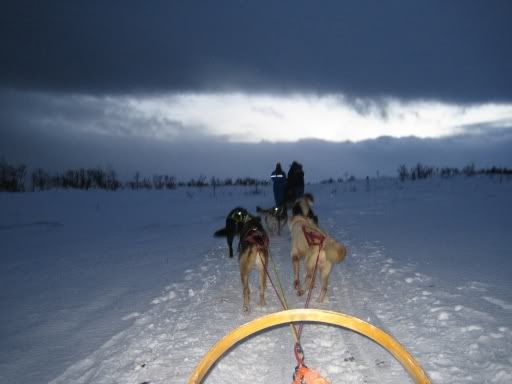
URBAN SPRAWL, WARMING CLIMATE LEAD TO CHANGE FOR DOG SLED RACE START


The modern challenges of a growing population are catching up with the world's most famous sled dog race.

Citing a warming climate and sprawling development, officials with Alaska's Iditarod Trail Sled Dog Race said Wednesday they were making permanent the changes that in recent years have become the norm for the March event.

The March 1 ceremonial start in Anchorage will go 11 miles (18 kilometers), seven (11 kilometers) shorter than the traditional route. The actual competitive start of the 1,100-mile (1770-kilometer) race the following day will move 30 miles (48 kilometers) north to Willow from the traditional site in Wasilla, Iditarod headquarters and part of the fastest growing region of the state.

"A lot of development in the area makes it less desirable, and there have been less-than-winter conditions," said Stan Hooley, executive director of the Iditarod Trail Committee. "It just doesn't make sense to us to make choices that are not in the best interest of both the two- and four-legged competitors."

Long gone are the early days of the race begun in 1973 to commemorate the 1925 delivery by sled dogs of lifesaving diphtheria serum to Nome.

Because of lack of snow, the competitive launch - called the restart -has not taken place in Wasilla since 2002. The following year, conditions were so dismal along some stretches of the race trail north of Willow that race managers made the unprecedented decision to hold the restart in Fairbanks, more than 200 miles (320 kilometers) from Wasilla.

Since then, Willow has been the site where mushers and their dog teams begin the trek to Nome.

For the ceremonial start, snow is trucked along the route that begins in downtown Anchorage. That's not a solution for the actual competition, officials said.

Willow also has become the preferred site for its rural setting, officials said. Mushers take off from the frozen Willow River and soon vanish into the wilderness.

Wasilla, on the other hand, has seen tremendous development and growth over the years. Now houses and businesses line the Knik-Goose Bay Road parallel to the Wasilla race route leading to the checkpoint in the community of Knik, home of the late Joe Redington Sr., father of the Iditarod. Under the route changes, Knik also will be bypassed.

"No matter how many resources we have available, conditions will never be as race-ready as Willow," Hooley said. "No matter what the weather conditions would be, there's a lot of asphalt and other things that don't mix well with competitive racing. To be around that is stressful for the dogs."

Wednesday, January 09, 2008

CRICKET MUST COME FIRST -- SMITH


The use of more technology in umpiring decisions should be introduced with great caution, Proteas captain Graeme Smith said on Wednesday.

Smith was commenting on calls for more decisions to be referred to the third umpire to prevent the kind of poor decisions that created bad blood between Australia and India during the second Test in Sydney last week.

"If they do introduce challenges, like in tennis, there are all sorts of things to be taken into consideration - how much time it's going to take, how challenges would be structured," said Smith.

"It's harder in cricket than in rugby - unequal boundaries, camera positions, that sort of thing. If you're going to bring more technology into the game, it's got to be 100 per cent correct. You can't have it 50/50 or even 80/20.

"It's very important that it should be for the benefit of the game. We want to see the game moving forward - moving with the times, yes, but keeping certain traditions and what makes cricket good.

"It's the same thing in our environment. When decisions are made between administrators, media, players, whatever - the game of cricket must be the priority. It's what is best for cricket that counts."

Regarding calls for 'sledging' to be banned, Smith said on-field exchanges had their place, but there were lines that should not be crossed.

"The competitiveness needs to be there. I don't think anyone wants to rock up and watch a Sunday league game," said Smith. "People want to see two competitive international teams. But there certainly are lines that must be drawn.

"We know that you can't be swearing at other people, we know that you can't make stupid remarks at other people. But the banter and competitiveness need to be there.

"We know the barriers. We sit down with the match referee before every series and he tells the captains what to watch out for. I think it's having umpires who manage things on the field, and the captains must take responsibility for their players. As international sportsmen, we've got to know our boundaries."