Sport! Sounds simple enough but we know that it never is. Award winning Sport Presenter, Jon Gericke, brings you the action from behind the TV and radio. Sport that should be read!
Cycling champion David George on Tuesday admitted to having used the banned drug EPO (Erythropoietin) and said he was prepared to suffer the consequences.
"I will not be asking for a B sample to be tested as I know the result will ultimately be the same," George said in a statement.
"I fully understand the consequences of my admission and will bear the results of this."
George tested positive for EPO in an out-of-competition test conducted by the SA Institute for Drug-Free Sport (SAIDS) on August 29.
"Cycling, as you know, has been a confusing space and although it has given me incredible moments it has also given me experiences that no person or young athlete should have to go through," George said.
"I would like to apologise to my sponsors, who have given me every opportunity to chase a dream, and team mates, for whom I have the utmost respect. I will endeavour to make right where humanly possible."
One of South Africa's top cyclists, he is a former Olympian, a podium finisher in the Cape Epic, and a former Lance Armstrong team-mate on the United States Postal Service Cycling team 1999-2000.
EPO is a hormone which increases the red blood cell count, thereby increasing the athlete's oxygen-carrying capacity and enhancing performance.
"The drug is especially beneficial in endurance sports where athletes are competing over long distances in sports like cycling, running and triathlon," SAIDS CEO Khalid Galant said.
"We had warned the sports community a year ago that we would be vigorous in our testing of both blood and urine of our top athletes. We will continue to aggressively target EPO dopers."
George was suspended with immediate effect from competing in any event while the SAIDS process took its course, said Cycling SA.
"We respect the independence of the SAIDS process and will respect the outcome," Cycling SA president William Newman said.
"Cycling SA further reiterates its zero-tolerance to doping in sport, and confirms that there is no evidence of this being an endemic problem in the sport in South Africa."
Meanwhile, Nedbank reacted to the news of George's positive doping test, by suspending its sponsored professional cycling team, Team 360Life, for which he rode.
"The suspension of the team will continue until further notice," spokeswoman Tabby Tsengiwe said in a statement.
She said Nedbank did not tolerate the use of banned substances or performance-enhancing drugs and supported the SAIDS, Cycling SA and Union Cycliste International in promoting clean conduct in the sport.
The International Cycling Union (UCI) is to open an investigation into allegations that Olympic champion Alexandre Vinokourov of Kazakhstan bribed Russian Alexandre Kolobnev to win the 2010 Liege-Bastogne-Liege race, the governing body said on Monday (November 5).
Vinokourov won the one-day race by beating Kolobnev in a two-man finish. The investigation is starting because the UCI has received a case file from an Italian public prosecutor who is investigating alleged corruption in cycling. UCI President Pat McQuaid said that both riders have been summoned to the UCI headquarters in Aigle,Switzerland and that if they were found guilty, the license commission would re-evaluate the world tour licenses of the Astana and Katusha teams. On Saturday the Italian Corriere della Sera newspaper published details of the Padua investigation into Vinokourov's victory, including the email exchange between the two riders about payments and bank details. Both riders are also alleged to be clients of Dr. Ferrari, with details of Vinokourov's payments to the disgraced doctor revealed in the recent USADA evidence. Police in Padua are investigating the possibility of a team doping programme at Astana by Dr Ferrari after Leonardo Bertagnolli and Volodymyr Bileka gave sworn statements to police that they saw several Astana riders working with Dr. Ferrari at altitude. Vinokourov officially retired after winning gold in the Olympic road race in London but will stay in cycling as the head of the Astana team in 2013. The UCI recently awarded Astana a WorldTour licence for 2013 but the team's place in the highest echelon of cycling could be at risk if it is proved that Vinokourov paid-off Kolobnev to win Liege-Bastogne-Liege. Astana has signed Vincenzo Nibali as team leader for 2013.
The
spectacular new route of the tenth edition of the Absa Cape Epic, which takes
place from 17 to 24 March next year (2013), promises to be as exciting and
challenging as previous years. Both local and international riders will take on
the demanding eight day mountain bike adventure of 698km with 15 650m of
climbing from Citrusdal to Lourensford Wine Estate.
The route,
which changes significantly each year, will lead 1 200 participating cyclists,
world champions and dedicated amateurs, through vast distances of challenging
terrain. With its unexplored landscapes, the stage locations of Citrusdal,
Tulbagh, Wellington and Stellenbosch await the most prestigious mountain bike
stage race in the world, before riders again finish at the Lourensford Wine
Estate, as has been tradition since 2007.
One of the
most visited tourist attractions in the southern hemisphere, the Victoria &
Alfred (V&A) Waterfront, will again play host to the opening celebrations
and registration for this pioneering, tough and breathtaking mountain bike race
on 15 and 16 March 2013.
For the sixth
time in the Absa Cape Epic’s history, riders will compete in a prologue. A
common feature in grand road cycling tours, the prologue at Meerendal Wine
Estate will allow spectators to see teams race against the clock. This showcase
event will decide which teams will wear the coveted leaders’ jerseys at the
start of stage 1 on Monday, 18 March 2013, from Citrusdal.
Says Kevin
Vermaak, Director and Founder of the Absa Cape Epic: “The Absa Cape Epic has
again selected some of the finest terrain that the Western Cape has to offer.
Our route designers have managed the perfect balance between challenging
terrain, exciting single-track and scenic beauty in their quest for the
ultimate mountain biking experience.”
Following the resounding success of the 2012 Prologue, the Absa Cape
Epic returns to Meerendal Wine Estate in Durbanville with a brand new prologue
route in 2013. Set off with a bang, riders will leave the start chute riding
through - yes, through! - the historic Meerendal Manor House and almost
immediately thereafter face a challenging climb up "Stairway to
Heaven" to the top of Dorstberg, a mountain top boasting magnificent 360
degree views of world famous landmarks such as Table Mountain, Robben Island and
Cape Point.
Pressed for time, teams will have to forego sight-seeing as they dive
straight into a rugged, Renosterveld lined trail that descends into the quarry
and adjacent Hoogekraal farm, where sweeping singletrack forming part of the
Tygerberg Mountain Bike Club trail system lies in wait. Well bermed turns make
for a fun roller coaster descent as the route ultimately heads back through
steep vineyards and a steady climb past dairy fields onto the picturesque
Meerendal Wine Estate, finishing off with some more singletrack and ensuring
riders finish the first day with big smiles on their faces.
Stage 1 – Citrusdal to Citrusdal (103km, 2 500m climbing)
Stage 1 is a 103km loop on
virgin Absa Cape Epic territory, starting and finishing in Citrusdal, a small
farming town at the foot of the majestic Cederberg Mountain Range. The stage
starts with a bang, climbing from the word go – up Piekenierskloof on
relatively smooth roads. As the gradient flattens out, it will be the sandy
surface slowing riders down as they scale the first major obstacle of
the day.
From the top, riders are
awarded with breathtaking vistas onto the Olifants River Valley some 600m
below, and a fast, in places loose and rocky, 7km descent. Crossing the
Olifants River will be a wet affair, before the climb out the valley on the
other side – a steady 8km effort with 500m of elevation. The next few
kilometres will become a blur until riders hit the 4km section of rugged dual
track and a short, but thrilling single-track descent. This will be followed by
a gradual descent to water point 2, the farm roads being just uneven enough to
keep participants focused, but at pleasant cruising speed past the citrus
orchards. Riders need to fill up properly at this water point as the most
challenging section of the day awaits. Over the next 7km, riders will have the
illusion of having climbed out of the narrow hot valley, only to see another
steep trail forcing portage up ahead of them. To reach it, riders need to put
their downhill skills to the test on the narrow, rutted quad bike trail. This
short and technical section is bound to take the back half of the field over an
hour to complete.
The long descend to water
point 3 is followed by approximately 20km through the farmlands in the Olifants
River Valley. With no significant climbs worth mentioning,
though by no means flat, riders will enjoy a slight reprieve before reaching
the final obstacle of the day – a tough, sandy slog up the mountain side and
just reward of a fast, fun descent into the race village in Citrusdal.
Stage two will take riders deep into the
Koue Bokkeveld, known for its spectacular sandstone formations. The area often
gets snow in winter, but riders will only fantasise about that, with summer
temperatures regularly in the upper 30’s. Most of the work is done early in the
day with riders putting mileage into their piggy banks when scaling Middelberg
Pass, a relentless climb with 900m altitude gain over the first 18km, starting
off on tar before turning into smooth gravel road. The descent onto the plateau
is fast and exhilarating with no technical obstacles, but a few sharp bends to
slow riders down. The route will traverse beautiful buckfields on rolling dual
tracks and farm roads. Riders can make up some time until just before the half
way mark, where a 4km climb takes them to the highest point of the entire race
(approximately 1 150m above sea level). Shortly afterwards they will be
rewarded with a 5km singletrack section, winding its way through red sandstone
formations. Overall this stage feels fast and relatively flat, until riders hit
the rugged and challenging wagon trail that takes them into the Witzenberg
Valley. Cleared for the race by local farmers, who are keen mountain bikers
themselves and happy to share their home playground, this part of the race will
showcase some of the finest terrain the Western Cape has to offer.
The best is saved for last when riders finally get to cash in on that
piggy bank - a technical 5km singletrack, an old wagon trail opened up for the
2010 Absa Cape Epic, plummeting into the Tulbagh Valley. Stage two could almost
be considered a ‘roady’ stage, although true roadies will be in for a wake up
call when they hit the wagon trails. The stage offers a fantastic transition
onto a new playground, from the rugged and remote Cederberg, to the fertile
Tulbagh Valley with its quaint village and wine farms.
Imposing mountain ranges,
the Obiqua Mountains to the West, the Winterhoek Mountains to the North and the
Witzenberg range to the East, surround the town of Tulbagh. The mountain basin
enjoys equally attractive conditions for wine making and mountain biking, and
both have seen advancements in recent years, with not only new vineyards, but
also new trails springing up. What better combination than having the race
village at the Saronsberg Wine Estate? Stage 3 offers a ‘tour of the basin’,
with a figure of 8 traversing the vineyards and farmlands, skirting the
surrounding mountains. By now riders should be used to starting with a climb –
400m over 15km, with a short warm up, being rather gentle on the legs though.
This is followed by 3km of sweeping single-track, finishing off with a section
through poplar forest. This moderate start is characteristic for what follows,
a pleasant day, with lots of ups and downs interspersed with flowing
single-track sections. However, it all becomes one big blur after the previous
two days. What stands out is that the day is more gentle, the soil is softer,
the vegetation more lush and the hills shorter. If through that blur riders
happen to hear the finish line, smell the race village, but their speedometer
only reads 55km, they need to keep peddling. So close and yet so far from home,
they are about to embark on the second part of the figure of 8. This loop is
shorter, but includes the same amount of climbing as the first one, and just
when everyone thinks ‘this wasn’t too bad’, Dr Evil and the route design team
show their true face. After water point three comes the blow to the legs – a
1.5km climb on a steep farm road, followed by a short descent and 3 more short
but sharp climbs on rough surface, before it is finally (almost) all downhill
and back to the manicured fields of Saronsberg Wine Estate.
Stage 4 is
another transition day moving on to a new destination, characterised by three
major climbs and extremely varied terrain. It is a stage of contrasts with
smooth gravel, then very rugged, followed by the National Monument of Bains
Kloof Pass on tar, then beautifully manicured purpose built single-tracks.
The first 15km are ‘free
mileage’, spinning out the legs on flat gravel and also some tar road. The
route then turns onto forestry roads gaining some elevation skirting the side
of the mountain. Before riders know they will reach water point 1, but the next
stretch will be slow going. A 5km steady climb up on gravel road with an
average of 7% gradient awaits at Kluitjieskraal. On the other side, riders
descend into a desolate bowl. Soon the trail roughens until it becomes an 8km
bike swallowing descent. The gradient is not steep but the track is washed out,
rocky (and sandy) with many ruts and big holes lying in wait for the unwary
rider. After water point 2 a flat minor gravel road leads to the foot of Bain’s
Kloof Pass. The climb on tar is 16km and not having to focus on any rugged
surface, riders will be able take in the spectacular scenery of this National
Monument Site. On the other side the Cape Winelands open up, with views onto
Wellington, Paarl Rock and as far as Table Mountain, some 70km away as the crow
flies. Only the first bit of the descent is on tar, before riders plunge into
the beautifully kept Bain's mountain bike trails at Welvanpas, smooth flowing ups and
downs, perfectly carved into the mountain side. However, there is one more big
climb, most of it on forestry roads, and it is the best value for climbing a
mountain biker could ask for, earning themselves 4km downhill of handcrafted
single-track through fynbos vegetation. There is one more tiny bump, and then
the last couple of kilometers are all plain sailing into the new race village
in Wellington.
Stage 5 – Wellington to Wellington (75km, 1 800m climbing)
The
fifth stage is like a bonus day – short, sweet, and most importantly, great
fun! Riders will already have had a taste of the Bain's mountain bike trails at
Welvanpas on the previous day - a fantastic purpose built network of
singletrack, perched between the Wellington vineyards and the slopes of Bain’s
Kloof. The relatively short distance of 75km offers more single-track than any
previous Absa Cape Epic stage, featuring some amazing cross-country terrain,
lots of twisting ups and downs – all in all an extra enjoyable day to
re-energise body and mind. To avoid any congestion on the trails, the start
groups will be staggered out over 1.5 hrs.
Stage 6 –
Wellington to Stellenbosch (100km, 2 950m climbing)
With a maximum stage time of 10 hours, riders should prepare
themselves for a long stage, the last real hurdle of the 2013 Absa Cape Epic.
The first 20km are primarily in the forestry plantation on the slopes of Du
Toitskloof, as riders tackle a steady 10km climb followed by an equally long,
fast descent interrupted occasionally by some soft forest single-track as well
as a short spike. The second major climb is primarily through orchards that
soon give way to mountain fynbos as the trail turns more rugged, including
another single-track descent, but riders need to watch out for the handle bar
grabbing fynbos. By the time riders cross under the National Highway (N1) at
the 35km mark, they will have completed almost half the climbing of the
day. The next section is fast going, and riders clock up some easy mileage
as the route takes them alongside the Drakenstein Mountains on a mix of farm
and gravel roads in the direction of Franschhoek. The highlight being when
riders past "Freedom Hill", the hill that former President Nelson
Mandela looked out at from his prison house at Victor Verster Prison (now
Drakenstein Correctional Facility) where he spent the last three of his 27 year
imprisonment before being released on 11 February 1990. Once the route makes
the turn towards Helshoogte Pass it's slow going, as the trail hugs the steep
slopes of the iconic Simonsberg Mountain. As riders crest the pass, views onto
Stellenbosch, the second oldest town in South Africa, and its surrounding
winelands open up, but it is still quite a way to the race village, passing
through prestigious wine farms and the hidden Idas Valley. True ‘tunnel vision’
will set in as riders go underneath the R310. From here it is one last steep
climb, before a sweeping descent sweetened by some more forestry single-track
which takes riders into race village for a one night stand, before the final
stage looms.
The final stage of the 2013 Absa Cape Epic is short, with only one
major climb at the halfway mark. Riders will leave Stellenbosch along the
mountainside through Coetzenberg and Eden Forest, then work their way into the
Stellenbosch Winelands. The trail climbs up through the vineyards, opening up
spectacular views of False Bay, as far as Cape Point, and back to Table
Mountain and Durbanville, where the journey started 7 long days ago. Having
mastered the 9km climb up the side of the Helderberg Mountain into the
Lourensford Neck, the finish line is almost within sight as the view into the
striking Lourensford bowl opens up. This is the first time in Absa Cape Epic
history that riders approach Lourensford Wine Estate from a totally different
direction and not via Gamtouw Pass. The final 25km are predominantly downhill,
on forestry roads on the higher elevations, interspersed with some
single-track, and into the orchards and vineyards on the lower slopes. The final run onto the lush green polo field packed with grandstands,
marquees and supporters promises to be unforgettable.
Says Vermaak: “We’d like to honour the effort that so many of the world’s top riders
make to ride the race, travelling from around the world to be here, with our
increased prize purse of R1 million. Celebrating the
iconic 10th edition of the race is testimony to how this event
continues to grow from strength to strength. I’d
like to thank our sponsors for their on-going support in working with us to
grow this event.
“We aim to offer all our
participants from around the world a spectacular route which showcases the best
the Western Cape has to offer. Every year we introduce new routes, with
suitable technical and challenging riding, that take the riders to new towns
and at the same time offer them magnificent scenery, with some of Africa’s wild
animals to boot. Without the incredible support of Cape Nature Conservation and
the farmers, this would not be possible as they give us access to their
reserves and farms. The Absa Cape Epic is progressively becoming an iconic
endurance event on the world calendar, and finishing this event is and will
always be an enormous achievement. It is an immense physical and mental
challenge, with riders spending many hours preparing and training for the title
of ‘Absa Cape Epic Finisher’,” says Vermaak.
In July this year, former Arsenal striker Robin van Persie used his official website to announce that he will not be signing a new contract at Arsenal, partly because of disagreement with the club hierarchy over the strategic direction of the club.
The move then brought to a swift conclusion protracted transfer as Van Persil sealed a 29 million pound move to Manchester United, where he has thus far flourished. But the move has also shown the power of digital and social media to give teams and players almost direct access to their fans.
The ability to exploit this advantage fully by providing unique content has not been fully appreciated by South African teams and sports stars. This is according to Andre Hugo, Director within Deloitte Digital, who took part in a panel discussion at the recent South African Sports Industry Summit.
“The key to successfully drive audience growth on digital and social media platforms is to provide unique content” says Hugo. “People want to get inside a sportsmans mind” he says. So exclusive footage for preparation for a big match or fight, or insights into a national tour are all examples of unique insights players can offer their fans and followers.
Sports offer a rich source of information through statistics and if these are packaged in a user-friendly manner, they can help drive engaging and relevant content.
“In future, the commercial successes will be driven by the communities that grow around sports teams, players and sports codes in general,” says Hugo. He notes that content will accelerate the growth and momentum of communities. But in order to do this the content needs to be localised and tied to specific events.
Hugo says it is important that digital marketing must not only focus on the smart phone segment, but also cater for the basic handset market. He points out that South Africa has 65 million active handsets, about 38% of which are basic. Also, in South Africa a significant portion of followers of a sport like soccer may actually lie in this segment of the market.
So while a fancy app to give score updates and league table and stats may be widely used, the old fashioned SMS score update option must not yet be jettisoned.
Hugo points out that the growth of digital platforms by sports broadcasters has led to this demand being extended directly to sports teams and stars. “Companies are finding innovative ways to monetise digital channels,” says Hugo. This can be done by embedding branding in pictures and applying dynamic hyperlinks to pictures to purchase merchandise from online stores.
Hugo says companies who are leading the field in this area globally include ESPN and Yahoo sports on content and number of viewers as well as Skysports in the UK and Supersport locally for engagement.
Supersport for example has streamed 1800 different games across its platforms so far this year, and apart from its HD platform, these are now accessed through their website and on platforms like Twitter, where viewers can comment on the action.
The panel, which also included digital publishing pioneer and head of Woolworths on line Nikki Cockcroft as well as former journalist and head of Communications at Supersport Clinton van der Berg, noted that sports stars who are using digital platforms effectively range from Manchester United star Wayne Rooney and England cricketer Kevin Pietersen , although whether his divisive popularity is helpful is a different matter, and in South Africa, swimmer Cameron van der Burgh and the barrier breaking athlete Oscar Pristorius were held up as stand out examples.
Already a leader in South African sport, The Sharks have entered the
world of mobile technology by becoming the first South African sporting
franchise to launch their own interactive mobile app game with the arrival of
Sharkie!
Sharkie is a super-charged rugby game which is both interactive and fun,
and aimed at Junior Sharks or any adult that loves mobile games. With the game
you can take control of Sharkie as he runs, dives and bashes his way to the
tryline in 80 levels of non-stop action.
You can also pit your skills against other gamers and track them on the
worldwide leaderboard as you try and unlock all 36 achievements along the
way. This side-scrolling platform game will give youngsters a great
chance to learn about the game while having fun, as they dodge Shark cages and
tackle bags to get to Boerie rolls to up their power. As in any game of rugby,
the object is to score tries and here you can help Sharkie achieve his goal in
a fun way.
“We’ve always prided ourselves on being an innovative rugby franchise,”
says Sharks marketing manager Mike Ablett. “The arrival of Sharkie is just
another way we like to connect with our core base of rugby supporters while
looking for new ones at the same time. Sharkie is not merely a game, but rather
a way of connecting with our youth base of supporters so that they may have a
unique connection to the team we all love.”
The game was developed by Sunrise Productions, who researched what
children in the target age-group wanted from a game, while integrating the
values of The Sharks brand and lessons from rugby into the final product at the
same time.
“When designing a game for
Sharkie, the most important thing for us was to make it fun. The Sharks have a
lot of fun with their brand and mascot, so we definitely wanted to carry that
through into his first interactive outing. He's quite a cheeky, confident
character but he's also a bit ridiculous, so we wanted to bring that into the
game as well,” Dave Heckler from Sunrise Productions explains.
The new Sharkie game will be available on iOS with Android following
soon, as well as on Sharkie's new website, sharkie.co.za. The global
leaderboard will allow you to compare your scores to other players on
GameCentre (for iOS) and on his website.
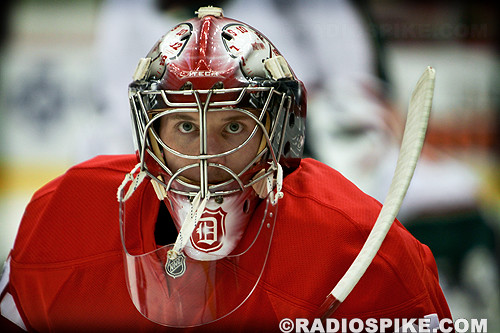
Detroit Red Wings goaltender Jimmy Howard was the United States hero as he shut out Finland
to lead his team to a 5-0 victory at the world championship in Helsinki on Sunday.
In Stockholm, Norway turned on the style to rack up the biggest score of the tournament by beating Germany 12-4.
The U.S. defence had a good day, restricting the Finns to just 18 shots, which Howard dealt with comfortably.
They were equally effective at the other end of the ice, firing five times past Finland's Kari Lehtonen in front of his home fans.
The win vaulted the U.S. into second place in group H, three points behind Canada and one ahead of the Finns.
In the day's other game in the group, Slovakia edged out Switzerland 1-0 to tighten their grip on fourth place.
Patrick Thoresen notched a hat-trick as Norway rattled a dozen goals past Germany in group S in Stockholm.
Thoresen netted his third during a six-goal second period blitz which finished with the Norwegians 9-1 up and the Germans in disarray.
Earlier in the day, Russia preserved their perfect record with a 2-0 win over the Czech Republic.
Yevgeni Malkin scored his seventh goal of the tournament when he converted a powerplay to put Russia two up at the start of the second period.
The Russians top group S ahead of Sweden, the Czech Republic and Norway. The top four teams in each group have one game left to play.
The world's greatest athletes descend on London in July for the 2012 Olympics. Here are 10 to watch when the Games get underway:
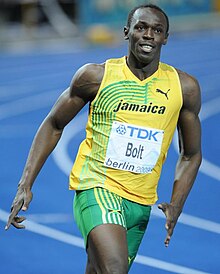
Usain Bolt (athletics)
The face of the Beijing Olympics where the Jamaican sprinter's jaw-dropping speed earned him three golds in the 100m, 200m and 4x100m relay and three world records.He has been pretty much unbeatable when it matters since, winning the five golds from the last two world championships -- his only blemish coming in Daegu where he was disqualified after false-starting in the 100m.
Tickets to watch Bolt race in London will be like gold dust, but those with seats better not be late as some predict, if he is firing on all cylinders, he can lower his 100m world record mark below 9.5 seconds.
Yelena Isinbayeva (athletics)
The Russian manages to combine grace and power in the pole vault to devastating effect, soaring higher and higher since setting her first world record of 4.82 metres in Gateshead in 2003.
Since then she has steadily raised the bar to 5.06 metres, considerably higher than one of London's famous red double decker buses, claiming five world titles and the Olympic golds in Athens and Beijing.
Should the pole vault queen win in London, when she will have turned 30, she will become the first female track and field athlete to win gold at three consecutive Games.
David Rudisha (athletics)
The latest in a long line of Kenyan two-lap specialists, the 23-year-old world record holder will be aiming for his first Olympic gold when he lines up in the 800 metres in London.
Rudisha, a Maasai tribe warrior, set a world record of 1:41.09 in Berlin in 2010 and then a few weeks later lowered it again to 1:41.01. He is the current world champion and was voted world athlete of the year for 2011.
London Olympic chairman Sebastian Coe will have a keen eye on the lanky Rudisha's performance, having once held the world record over the distance himself. Rudisha said watching videos of Coe inspired him to run.
Nataliya Dobrynska (athletics)
All eyes will be on the mourning Ukrainian multi-eventer's every move as she takes on British darling Jessica Ennis in the heptathlon.
She emerged from nowhere to win the gold in 2008 and againupset the form book at the recent world indoor championships, beating Ennis and Russian world champion Tatyana Chernova to gold in a new pentathlon world record.
Dobrynska suffered heartbreak recently when her husband and coach Dmytro Polyakov died after a lengthy battle with cancer.
Allyson Felix (athletics)
The shining star of the U.S. women's track and field team, she is still without an individual gold at an Olympics, having to make do with silver in the 200m at Athens and Beijing.
The wholesome daughter of a Christian minister in southern California, Felix was denied a fourth successive world championship 200 gold in Daegu last year.
Expect to see a lot of her in London if she doubles up in the 400m and competes in both relays.
Kenenisa Bekele (athletics)
Almost lost in the hype surrounding Bolt in Beijing, the Ethiopian's golden double in the 5,000m and 10,000m was arguably an even greater achievement.
The world record holder at both 5,000 and 10,000, he can justifiably lay claim to being one of the greatest distance runners of all time and will be the man to beat in London if he can arrive fully fit after two years of injury problems.
After pulling up in the 10,000m at the 2011 world championships with a ruptured muscle, his aura of invincibility was under threat and he must decide whether his body can cope with the Olympic double again
Michael Phelps (swimming)
Quite simply, American Michael Phelps owned Beijing's water cube in 2008, his size 14 feet and huge arm span powering him to eight gold medals and sparking endless online chatroom debates about whether he or Usain Bolt deserved to be called the greatest sportsman on earth.
That feat gave him the record for the most gold medals at a single Olympics, beating the seven of Mark Spitz in Munich, and few would bet against him raising his overall haul of 16 Olympic medals in London which he says will be his last Games.
Even a relatively modest haul of two medals of any colour would tie him with the 18 Olympic medals of former Soviet gymnast Larisa Latynina.
Katie Taylor (boxing)
Women's boxing makes its Olympic debut in London and Ireland's Katie Taylor will get the chance to add to her already groaning trophy cabinet in the ExCel Centre.
A three-times world and five-times European champion already, she has also represented Ireland in soccer and is rightly regarded as one of the Emerald Isle's greatest sportswmomen.
A devout Christian, she has become something of a celebrity, meeting U.S. president Barack Obama at the White House, starring in a rap video with Tinie Tempah and was last year's Grand Marshal at Dublin's St Patrick's Day parade.
Federica Pellegrini (swimmer)
Born near the watery city of Venice she learnt to paddle before she could walk, so it is appropriate that the glamorous Pellegrini has made her name as the her country's most successful female swimmer.
Won the 200m freestyle in Beijing to become the first Italian woman to win an Olympics swimming gold and currently holds the world record in the 200 and 400 freestyle.
At the Rome world championships she became the first woman to go under four minutes in the 400m.
A magnet for camera lenses, she regularly appears on countless glossy magazine covers.
Mark Cavendish (cycling)
The Isle of Man cyclist could get the ball rolling on Britain's gold medal haul by winning the men's road race.
He has other things on his mind first, though, as he concentrates on the Tour de France in which he already owns 20 stage wins.
He became the first British cyclist to win the sprinter's green jersey outright on the Tour last year but gold will be the colour he craves once the Olympic torch is lit.
.jpg)